
CRM Implementation Services
SuvoCRM handles CRM implementation services that take a new system from kickoff to go-live. That covers platform configuration, data migration, workflow and field design, standard integrations, user onboarding, and deployment on leading platforms, including Salesforce, HubSpot, and Dynamics 365. Tell us where you are.
What Are CRM Implementation Services?
CRM implementation services set up the CRM you have already chosen and get your team working in it. The work covers platform setup, data migration, workflow and field design, standard integrations, user accounts, training, and go-live, all done as one project with a start and a finish.
A project runs in a clear arc. We open with kickoff and requirements, build the configuration in a fresh environment, bring your records in, train each team, then cut over to the new system. The platform choice is settled before this starts, and the system is new to your team rather than one already in daily use.
A strong start is the whole point. When the setup fits the way your team works, people start in the CRM on day one and stop drifting back to the spreadsheets they trust. That early impression decides whether the tool sticks.
Our CRM Implementation Services
CRM Build and Setup Services
We configure the chosen platform end to end: org settings, pipelines, page layouts, and defaults that match how your team sells. The build reflects the direction set during CRM consulting services, so the project never drifts off plan.
CRM Clean Migration Services
Years of contacts, deals, and history have to move across cleanly. We map every field, de-duplicate the records, and load them in so nothing important is lost, a migration step that draws on our CRM migration services mid-rollout.
CRM Workflow Build Services
Your sales motion needs to sit inside the platform, not around it. We build the custom fields, objects, and stage-based workflows natively, with no code at all, and extend the repeatable parts through CRM automation services as part of setup.
CRM Tool Connection Services
The tools your team already runs should feed the CRM from day one. We connect email, calendar, ERP, and support with native and supported connectors, same groundwork our broader CRM integration services draw on later down the line.
CRM User Setup Services
A platform only pays off once your team logs in and uses it. We set up roles, permissions, and logins, then walk each team through the daily workflow, reinforced by hands-on CRM training services so the habit holds well past week one.
CRM Launch Support Services
The cutover is the moment most projects wobble, so we plan the switch with proper care. We run the launch and stay close in the opening days to catch problems early, then hand off to ongoing CRM optimization services for steady upkeep.
CRM Implementation Tailored to Your Industry
The setup shifts by sector. A finance build needs audit trails and tighter permissions from day one, while a healthcare setup gates patient records behind stricter access. Retail and manufacturing teams want the pipeline and product fields shaped to their order flow. We have launched CRMs across more than 12 industries.
Common CRM Rollout Problems We Solve
Rollout That Stalls Halfway
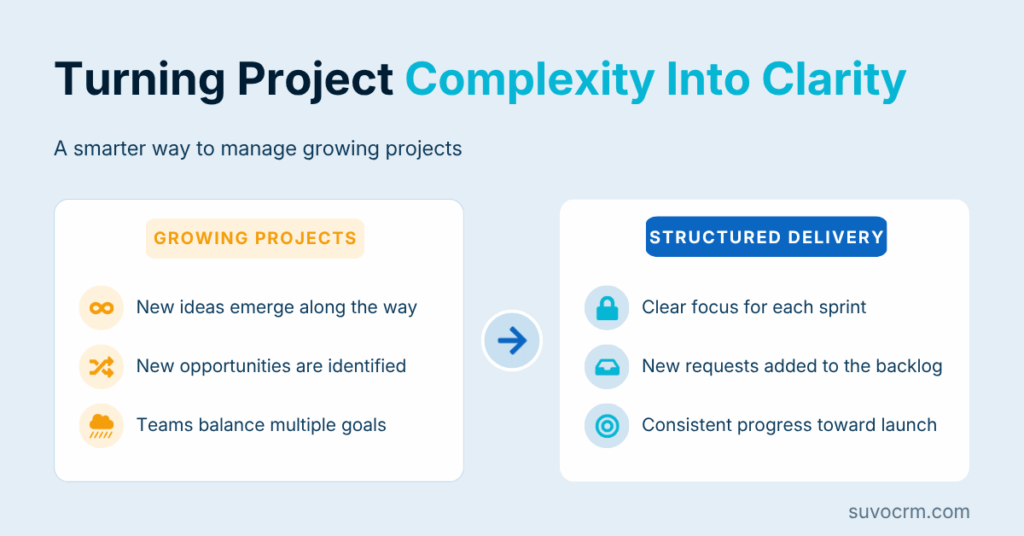
The CRM gets bought, then sits half-configured for months because nobody drives it to completion. We run it as a managed project with a clear plan and a fixed date, so the platform goes live instead of becoming one more paid tool no one ever finishes.
Old Data Too Messy to Move
Years of duplicates, blank fields, and dead records make the switch feel risky. We map, clean, and de-duplicate everything before it moves, so the new CRM opens on day one with records your team can trust instead of the inherited mess it replaced.
No One Owns the Setup
There is no internal admin who knows how to configure the platform or what a good setup looks like. We act as that owner straight up to launch, building the fields, workflows, and access rules, then handing your own people a system they can run themselves.
Team Won’t Leave the Old Way
People keep living in spreadsheets and the old tool because the new CRM feels foreign to them. We shape it around the real working routine and train each role, so opening the CRM becomes the easy path forward and fits the day people already have.
Sales Pipeline and Stages
We build the pipeline first, with stages that match how your team really moves a deal from new to closed. Entry and exit rules go in from the start, so the forecast holds up the moment the CRM switches on and skips the long stretch of messy guesswork.
Fields, Objects, and Records
We configure the custom fields and objects your business needs natively, with no code, so the data model fits the real operation. Reps capture the right details from day one and stop bending each record to fit a generic template built for someone else.
Standard Tool Integrations
We connect the everyday tools at setup: email, calendar, ERP, and support, using native and supported connectors. Data flows into the CRM from day one, so the team stops copying information between systems by hand and loses fewer hours to manual re-entry.
Roles, Permissions, and Logins
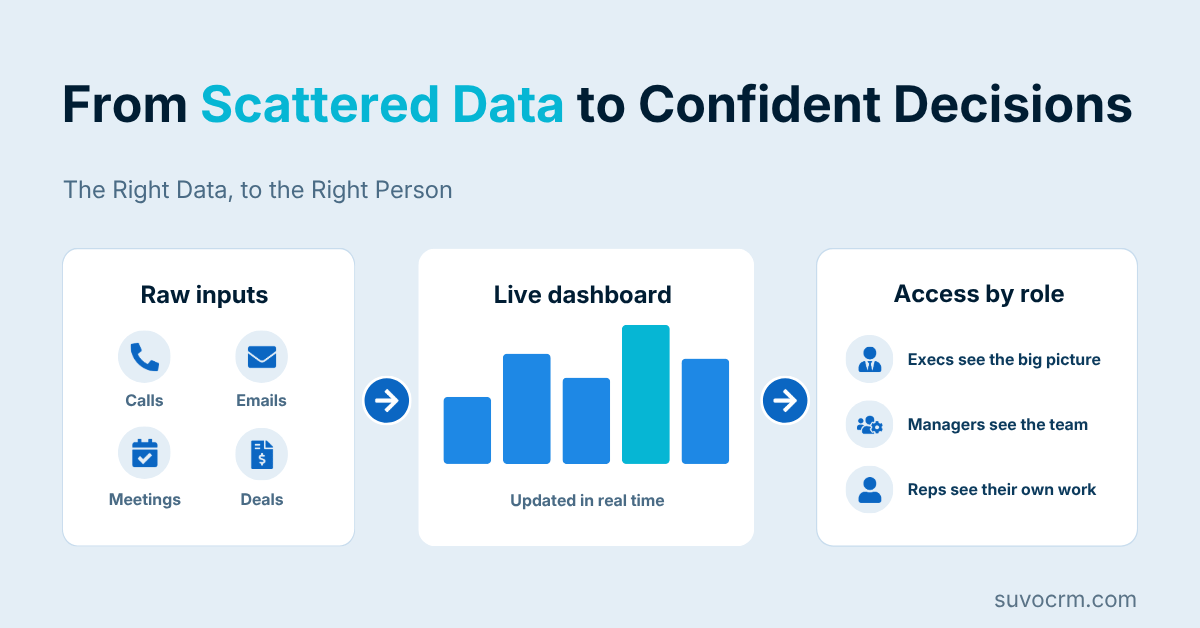
We set up users, role-based permissions, and access rules before go-live, so each person sees what they should and nothing they should not. The team signs in to a CRM that is ready to work in, with the wiring finished well before the first login.
Key CRM Features We Set Up at the Start
Why Choose SuvoCRM for CRM Implementation
Rollouts Are Our Core Work
A 30-person CRM team has spent much of its work standing up and deploying new systems. Implementation is the everyday job here, the core of what we do.
Hundreds of Launches Behind Us
We have taken more than 200 CRM projects from an empty platform to a team using it for real. Your rollout follows a path we have walked many times before.
Independent at Every Turn
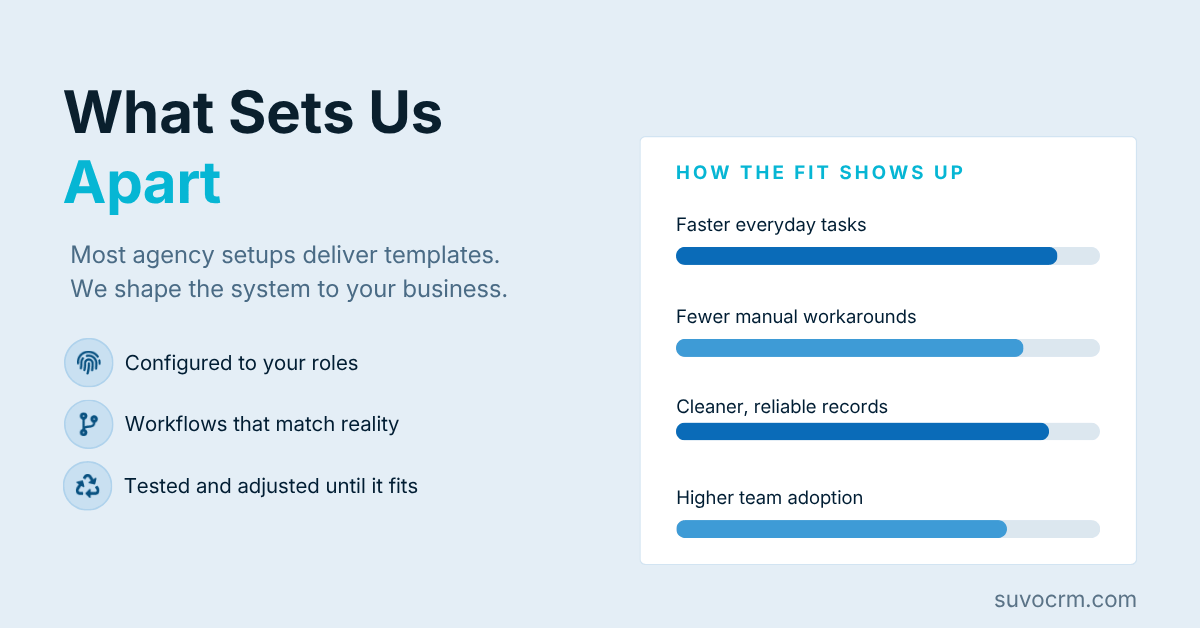
No vendor holds a stake in our agency, so the setup answers to your team, not a platform quota. We configure the major platforms and niche, industry-specific tools with equal care.
Built Right for AI Later
We set the CRM up with tidy data so any AI you add later has something solid to learn from, a step that rushed launches skip. Bringing AI and CRM together is our focus.
How Much Do CRM Implementation Services Cost?
CRM implementation usually runs between $10,000 and $60,000, set by how much data moves, how many users you train, and how many tools you connect. We price each project to its actual shape rather than dropping you into a fixed package.
A single-team setup on one platform with light migration tends to land near $10,000 to $20,000. A multi-team deployment with heavy data migration, several integrations, and full training reaches the top of the band, since it touches more teams and a deeper layer of setup.
For teams that want a hand once the system ships, we offer light post-go-live upkeep from around $1,500 a month. You see the full plan and price on paper before we touch your CRM. Reach out for an estimate matched to your project.
How Much Does CRM Implementation Cost?
Step 1: Configure
We set up the chosen platform in a fresh environment: pipelines, fields, workflows, and access rules built to match how your team sells, all before a single record is migrated.
Step 2: Migrate
Next, we map, clean, and carry all your contacts, deals, and history out of the old system, then check each record so the new CRM opens with data your team can trust.
Step 3: Train
Then each role walks through the daily workflow in the working system, so each team knows how to use the CRM the day it switches on rather than picking it up weeks down the line.
Step 4: Go-Live
Last, we run the cutover, move your whole team onto the new system, and stay close in the opening weeks to catch and fix anything that surfaces before it can spread.
What Is the ROI of CRM Implementation?
The return on a good implementation is simple: the team starts in the CRM right away, not stuck in a setup that drags on and quietly fails. A smooth rollout means less rework and no second migration down the road.
In our experience, a focused implementation is up and running for the team in about 8 to 12 weeks. The faster a team lands in the system, the sooner the spreadsheets get retired, and the work consolidates in one place.
Across our projects, around 90 percent or more of legacy records move cleanly on the first pass, so your team opens the new CRM to history it recognizes instead of a fresh pile of cleanup. Reach out, and we will estimate the timeline for your project.
What Our Clients Achieve
A CRM That’s Live, Not Half-Built
The system goes from bought to fully in use, rather than stalling unfinished for months.
Clean Records from Day One
History arrives de-duplicated, so the team opens to data it can rely on at once.
A Team That Starts in the CRM
People work in the new platform from day one instead of drifting back to spreadsheets.
A Setup Your Own Team Runs
Roles, fields, and workflows arrive documented, so your staff manages it after handover.
Daily Tools Connected at Go-Live
Email, calendar, and core systems feed the CRM, so nobody copies data over by hand.
A Calmer, Scheduled Go-Live
The cutover happens on a set date with support close by, not as a scramble no one owns.
How to Get Started with CRM Implementation
No need to map the whole project out before you reach us. Drop the platform you picked and your timeline into the contact field below, and we’ll take it from there.
What follows is a plain conversation about where your CRM stands today and the date you want it running. Expect direct questions from us, a clear read on your current setup, and a shared picture of what a smooth go-live means for your team.
The plan we draw up then fits the budget and timeline you give us, and the deliverables are spelled out in writing before you commit a dollar. We work with teams across the United States, Europe, and Asia. Get in touch and tell us which CRM you need stood up.